Where do I start?
Don't start with paint! I know. But the instinct, when you decide you want to paint, is to buy the materials, set up somewhere, find a nice view or a photo of one, and try to get it down. And that's the move that leads to the frustration, because you end up describing the view, and describing was never what you wanted to do.
Think about some famous landscape paintings. No matter who the artist is, Constable, Monet, Van Gogh or Turner, they’re not really about the landscape. Landscape is the vehicle for the mood or idea the artist wants to convey. It’s the same for any genre of painting. The great portraits are always about more than describing a likeness. You only need to think of the Mona Lisa or Rembrandt’s self portraits to know this.
Go and out in it. Walk through it. Notice what it's actually like to be there... the wind moving around you, the sound, the cold in your fingers, the way the light keeps changing before you can pin it down. That's the raw material. Not the view. The experience of being in it.
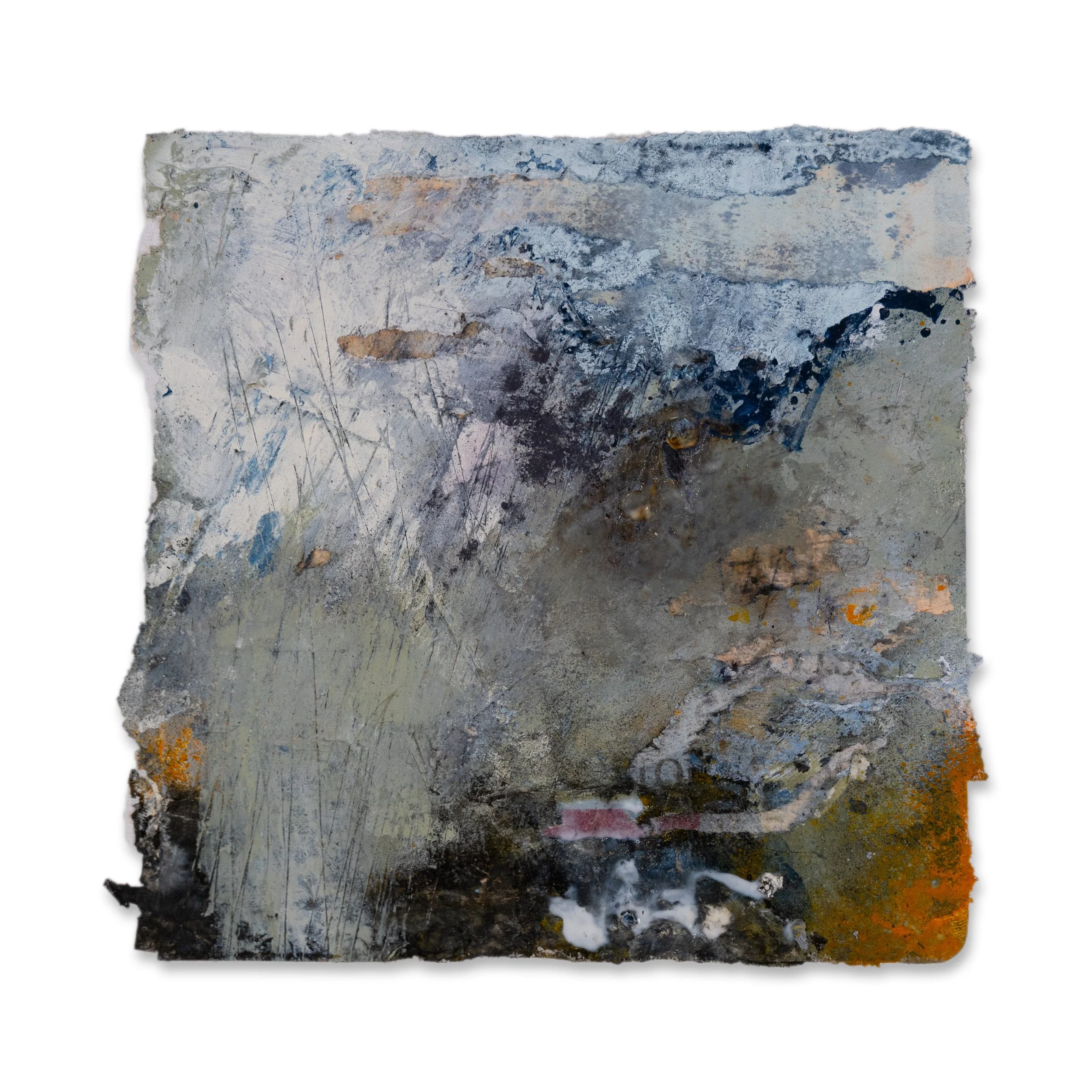
Marazion Hailstorm 25×25cm
The beach and the hailstorm
Here's an idea that unlocks it for a lot of people.
Every painting has a subject and a theme, and they're not the same thing. The subject of a painting might be the beach. But the theme might be the experience of being caught in a hailstorm on that beach. Two different things, interwoven.
A picture of the beach is depiction. A painting about being caught in a hailstorm is expression. It's not pictures ‘of’, it's paintings ‘about’. When one of my students heard that put plainly, her response was "that's freeing"... and it is. You're released from getting the view right, because the view was never the point.
Think of it like the difference between prose and poetry. Prose documents... it walks you along the beach and describes everything it passes. A poem doesn't do that. It distils and suggests. A few lines that somehow carry the whole of it, the essence, the spirit of the place. An abstract landscape works the same way. You're not writing the guidebook entry. You're writing the poem.
A lot of people tell me "I'm want to paint what I feel." But that’s too vague and undefined to work from. Your experience is the source of the feeling, it’s tangible. The wind, the sound, the hail. Paint from that.
Gather, don't perform
So how do you catch an experience? With a sketchbook, quickly, and without any expectation that what goes in it looks good.
Sketchbooks are tools for ideas, not for finished work or show anyone. It's a working library... sometimes I'll find something I did five or six years ago and go, oh, that's the colour I'm looking for.
Try this. Set an alarm on your phone for five minutes and sketch until it goes off. I know it doesn't sound like long, but once you start doing it, you realise how much you can get down. The alarm does the important work for you: it stops you fiddling, and fiddling is where the life drains out.
You never know what you have until you get back from a sketching or painting trip, so try to work without preconceptions or goals. Just make notes about anything that you find interesting and see where it takes you. It’s always worthwhile and at the very least, you spent the day outside looking hard at a place you love, and that's never nothing.
Do the thinking later
One more habit that changes everything: separate the doing from the thinking.
Outside is for looking, mark-making, playing with colour, and not worrying in the slightest about what any of it will become. The studio, later, is where you spread it all out and start composing... cropping, arranging, finding the painting in what you gathered. Trying to do everything at once, out on the hillside, is how paintings get overworked before they've even begun.
This takes the pressure off both ends. Outside, you can't fail, because you're only gathering. Inside, you're never facing a blank canvas, because the sketchbook is full.
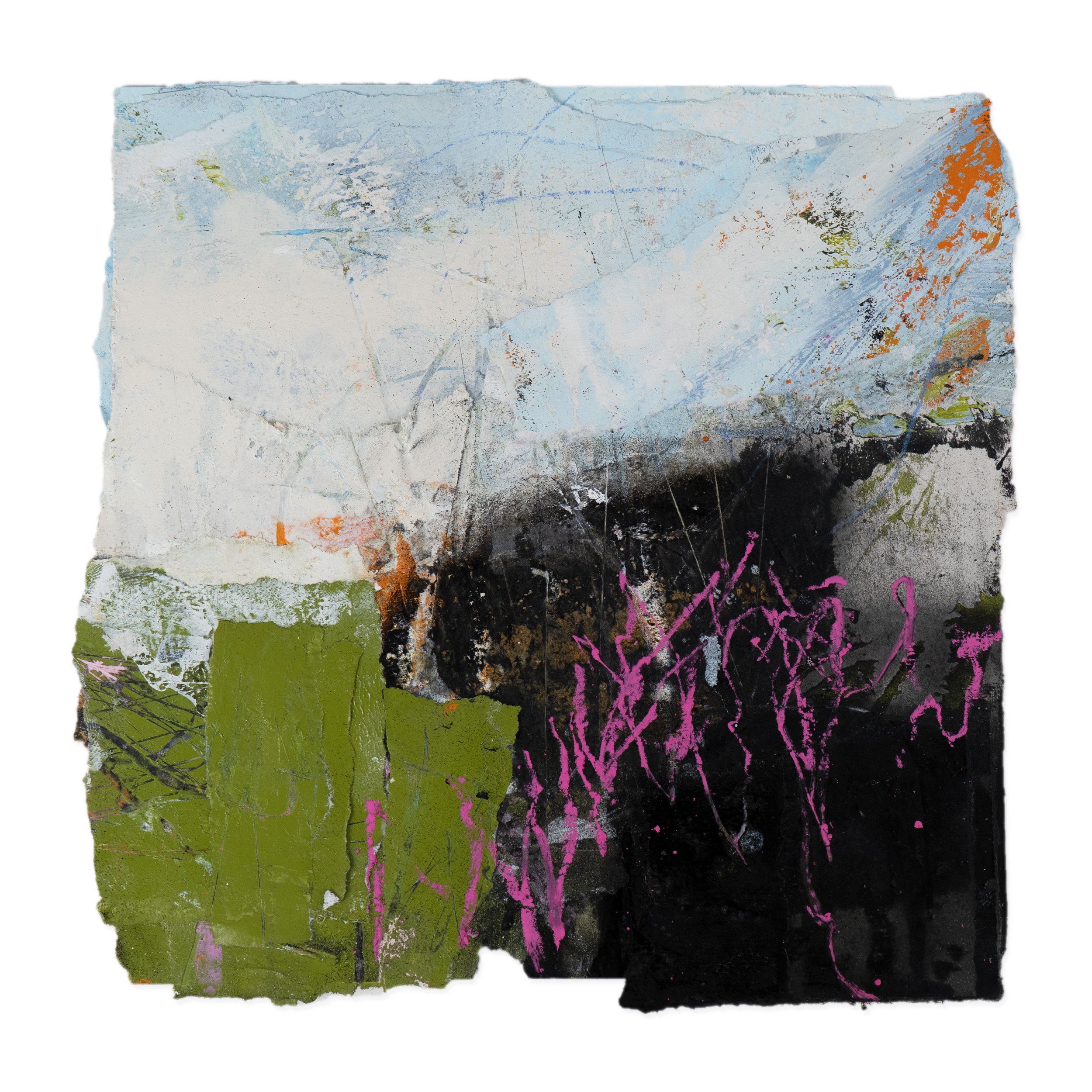
The Green Field 25×25cm
Doing it justice?
When you do get to paint, work on a few pieces at once rather than one precious painting. A series is an exploration... you can carry ideas across from one thing to the next, and no single painting has to carry all your hopes. It's the kindest cure I know for overworking.
And when you're not sure about something, a material, a mark, whether it'll work... don't worry about it. Just do it and see what happens. Either it works and you've learned something, or it doesn't and you've also learned something.
Why do you need pressure? You don't need pressure when you're painting. You don't need to think "It’s so amazing, how can I do the landscape justice? Otherwise I've failed." You know what? The landscape's fine. It doesn't need you to do it justice. It’s not about the landscape or the view, it’s about you & how you respond to it.
That's where you start. Not with the paint... with the experience.
