No pressure, just painting
How to make the most of your painting while you’re away from home or on holiday.
There’s a particular kind of freedom in painting somewhere far from your own studio. No easel set up, no “important” canvas waiting to be ruined, no voice in your head asking whether this is any good. Just yourself, some paper, and whatever is in front of you, unfamiliar and maybe even special.
It’s important to try to protect that freedom. When I’m away, I usually paint on loose paper, knowing I can carry on working with it when I get home. That one choice changes everything about how the work feels. There’s no pressure to produce a complete, polished piece. I’m not trying to make “Art” with a capital A. I’m just responding to the moment, the colour, movement and atmosphere. The ‘experience’ of being in a place rather than what it looks like.
The secret is in what happens later. I already know, before I’ve even packed my paints, that these sheets aren’t the finished thing. Back in the studio, I’ll tear them up, cropping to start finding compositions and usually collage them into something new. That knowledge changes the entire experience of painting on location. It takes all the weight off. A wonky perspective, a colour that didn’t quite work, a painting that trails off unfinished, none of it matters, because it was never meant to stand alone. It’s raw material. A fragment of a moment, not a final statement.
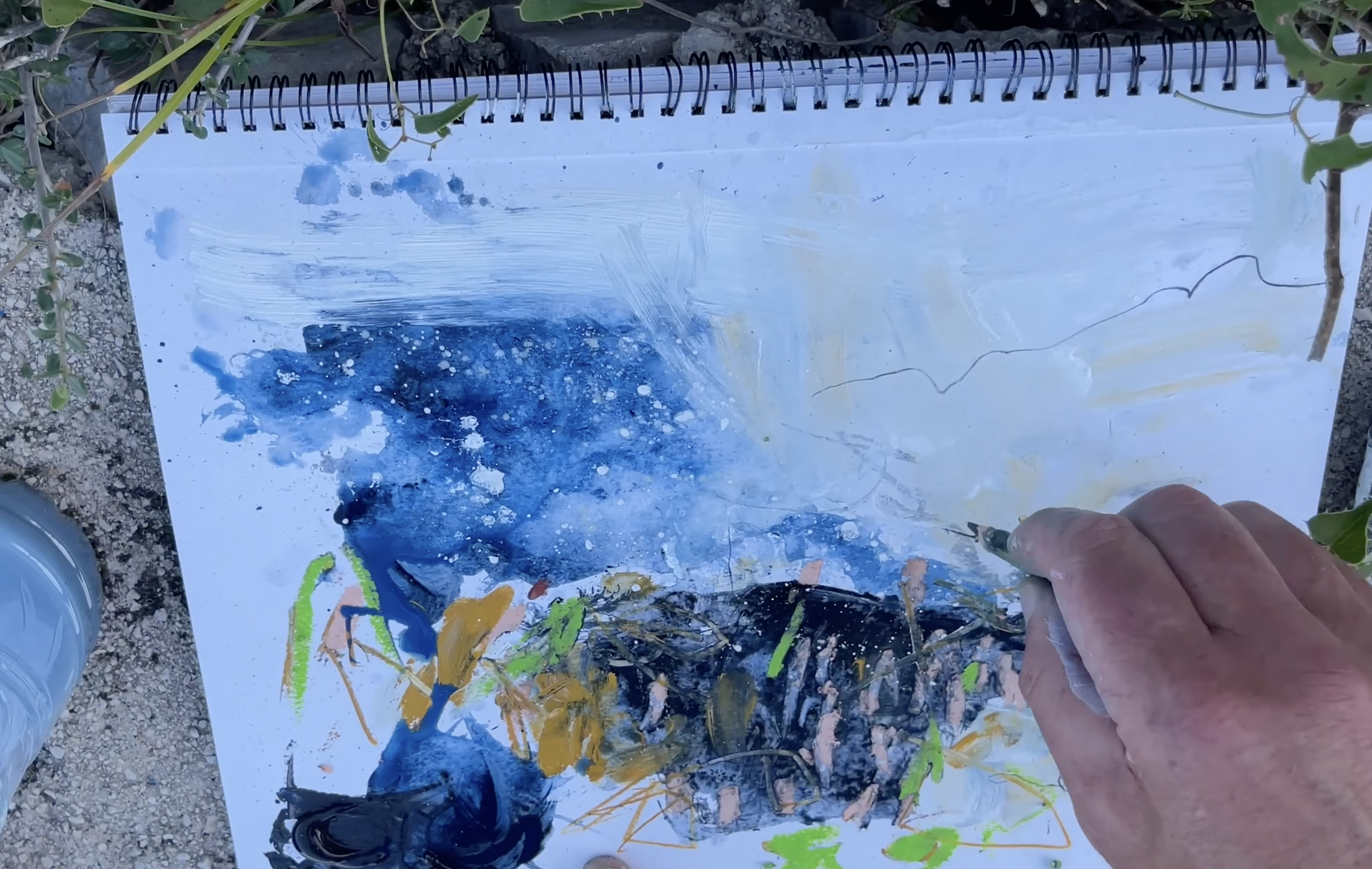
This shifts what the holiday painting is actually for. It stops being a performance and becomes a way of paying attention. Instead of worrying whether I’m capturing the scene “correctly,” I get to just soak it in and enjoy the rhythm of a place. The painting becomes a record of noticing, not a test of skill.
And that changes what I bring home. If you go away determined to make finished, exhibition-ready work, you come back carrying a quiet disappointment, a sense that you didn’t quite do the place justice, that the painting fell short of the experience. But when the goal was never a finished piece, there’s nothing to fall short of. What you bring home instead is the good feeling: the memory of the light, the pleasure of paying close attention, a stack of loose, imperfect fragments that still hold real information for later.
Only once I’m back in my studio does the “real” work start, sorting through the sheets, seeing what wants to be cropped, what fits next to what, letting new compositions emerge from fragments that were never trying to be anything on their own. It’s a bit like taking photos on film, you never know what you’ve got until you get home to look through them. No editing and sharing on the spot, nothing to take you out of the moment.
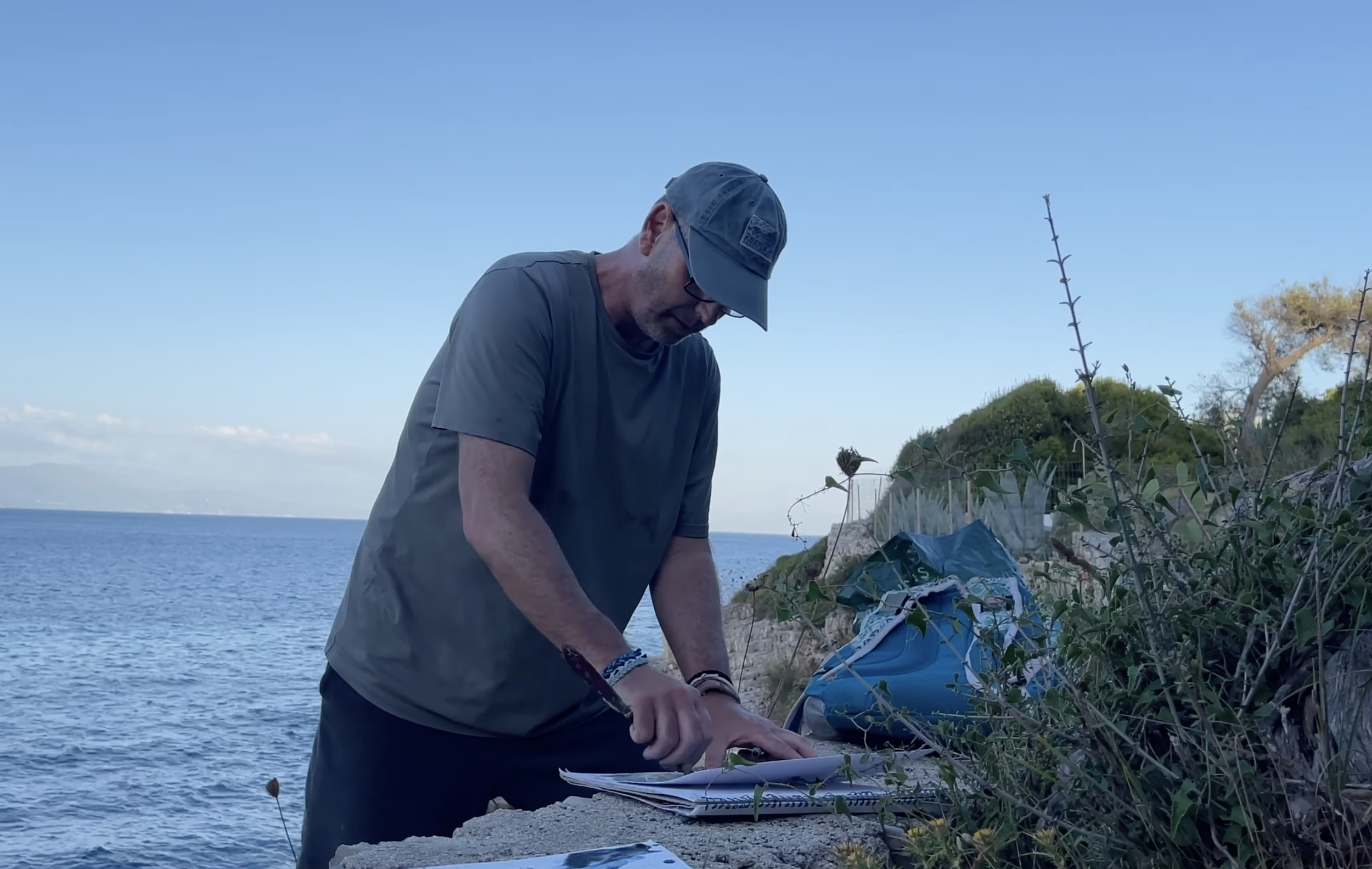
No pressure. Just painting. That’s the whole trick and it’s the reason I keep coming home from trips with both good memories and a stack of material I actually want to work with.
Give it a go if you’re going away. Pack light, minimum materials and just enjoy being there.
Where to start
That sorting-through, back home, is the part most of us do on our own. It doesn’t have to be.
Noble Art Membership
A new painting project every month, a library of over fifty videos on sketchbook practice, technique and materials, and my feedback on your actual work. £25 a month, no contract, cancel any time. Members also get £150 off the on-demand courses, which brings a £250 course down to £100.
Abstracting the Landscape: Explorers
New for 2026. Nine tutorials, around four and a half hours, on connecting what you see in the landscape to the marks you make. There’s no canvas in Part One, it’s all sketchbooks, colour notes and collage. £100, with a year to work through it.
Painting & Collage
If it’s the tearing up and reassembling that interests you, this is the course that goes into it properly.
Lewis
