What is abstract landscape painting?
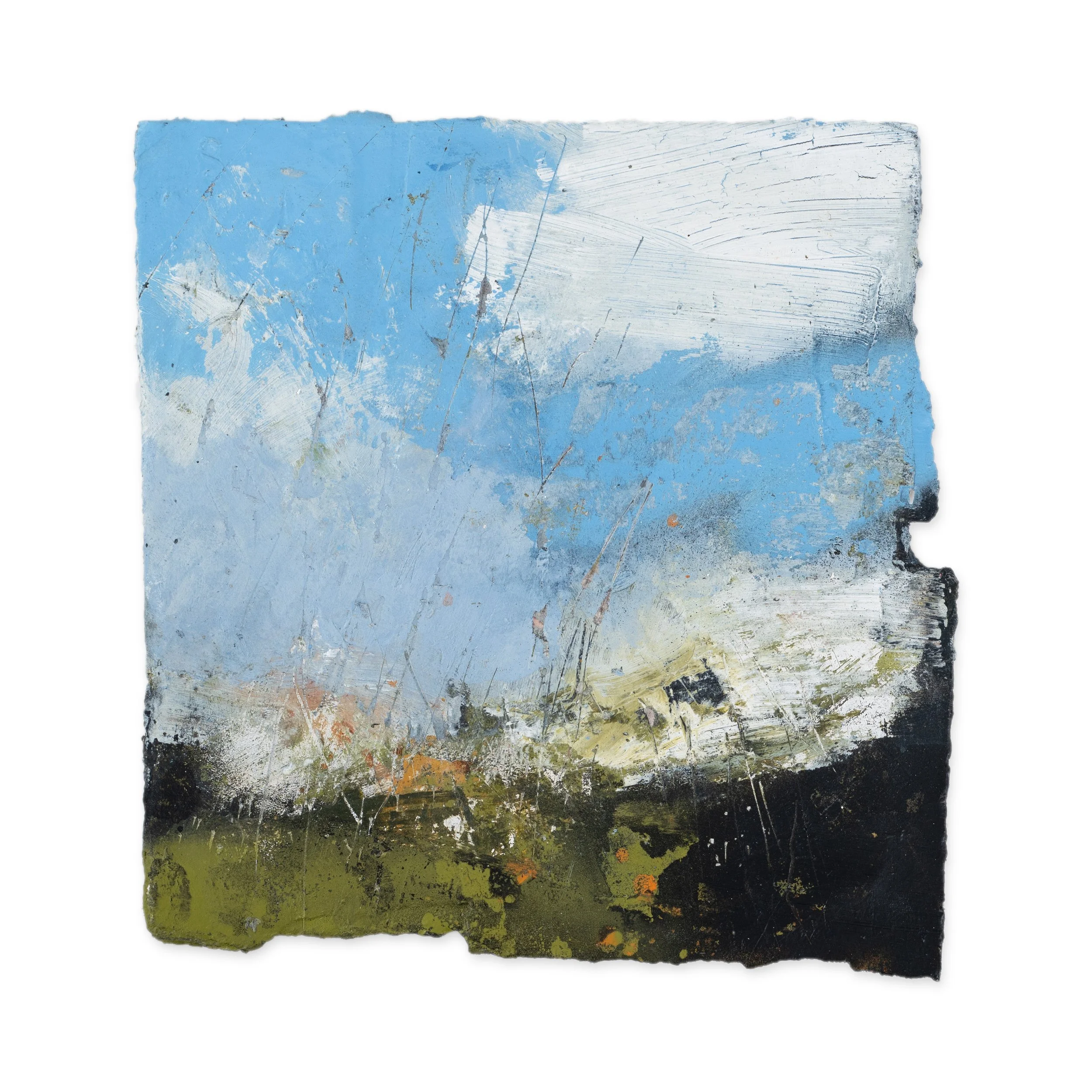
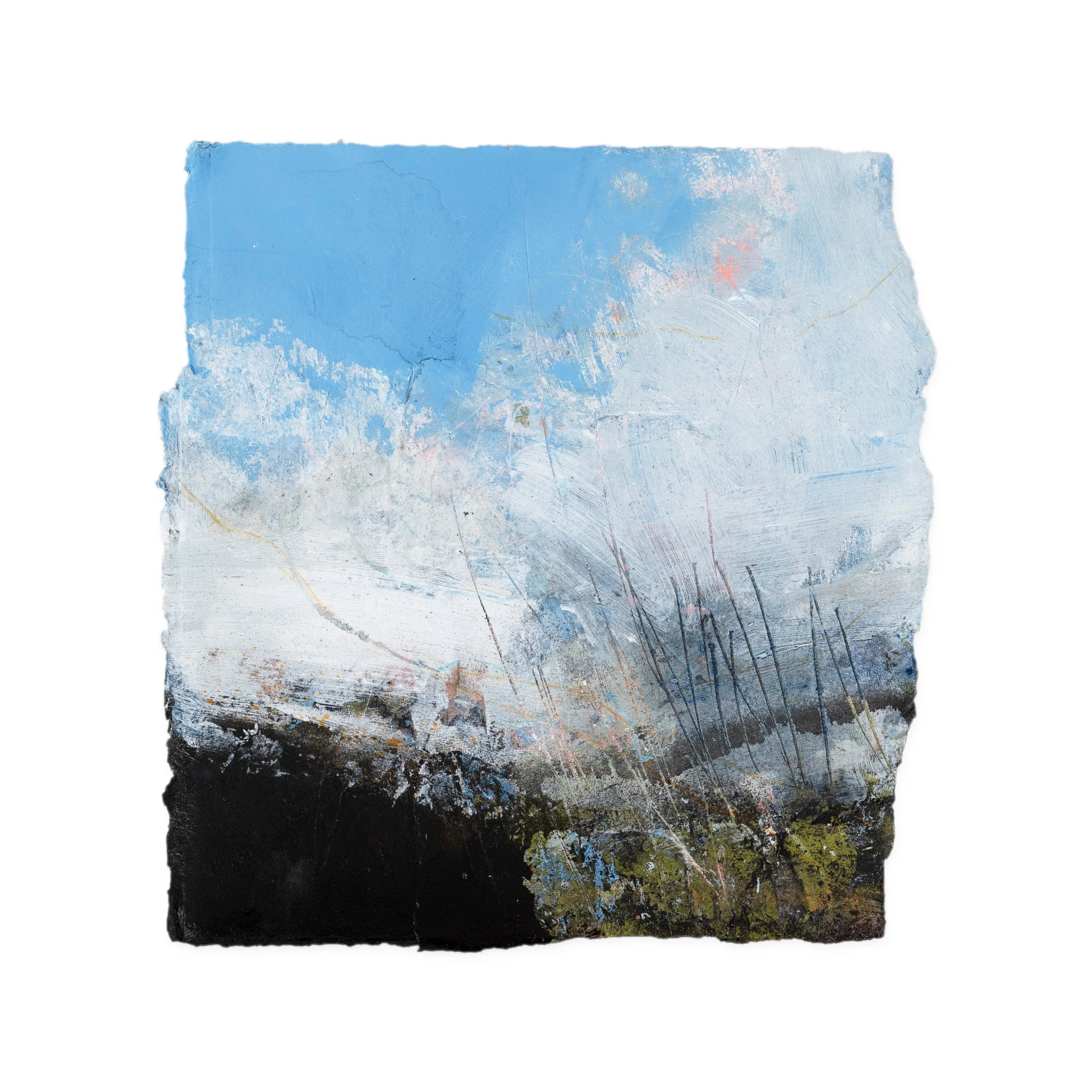
Abstract landscape painting sits somewhere between two things: the visible world, and the feeling of being in it.
I've also talked this through on video, if you'd rather watch than read.
A purely representational landscape tries to show you what a place looks like. An abstract landscape tries to show you what it felt like to be there. The weight of the light, the sense of space, the atmosphere of a particular afternoon.
That might sound like a subtle distinction, but it changes everything about how you approach the subject.
It's not about making things unrecognisable
When people hear "abstract landscape," they sometimes picture something completely unreadable: shapes and colours with no obvious connection to a real place. That's one kind of abstraction, but it's not what I mean.
Most of my own work is recognisably landscape. You can see the horizon. You can sense the sky and the ground. But the details are edited away. The colour is simplified. The marks are expressive rather than descriptive.
What's "abstracted" is the editing process. The decision about what to leave in and what to remove. You're not copying the scene. You're interpreting it. You're deciding what mattered about being in that place and letting that shape the painting.
Where it comes from
Abstract landscape painting has deep roots. Artists like Paul Cézanne began the shift away from pure representation in the late 19th century, treating the landscape as a structure of planes and colour rather than a scene to be copied. The American Abstract Expressionists, particularly the landscape work of Willem de Kooning and Joan Mitchell, took it further, bringing emotional and gestural energy into contact with the natural world.
In the UK, painters like Peter Lanyon made abstract work directly from the experience of being in the Cornish landscape, standing in wind, climbing cliffs, feeling the physical reality of the place.
What unites these approaches is the idea that the painting is a record of an experience, not just an image of a scene.
What it asks of the painter
Abstract landscape painting asks you to make decisions traditional representational painting doesn't. You have to decide what to include and what to leave out. You have to find a way to express atmosphere and mood through colour and mark, rather than through description.
It asks you to trust ambiguity. To leave things unresolved. To let the viewer bring something of their own.
These are different skills from representational painting, and they take time to develop. But the satisfaction, when a painting captures something true about a place rather than just its appearance, is quite different from anything you get by copying exactly what you see.
Where to start
If that sounds like the way you want to paint, there are two ways in.
The Abstracted Landscape
The original four-part course - a structured way in, built around the thinking behind the work rather than just the technique. Start today, with 12 months' access.
Abstracting the Landscape: Explorers
New for 2026. Nine tutorials, around four and a half hours, on connecting what you see in the landscape to the marks you make. Available now, £100.
And if you'd rather read a little more first, the beginner's guide to abstract landscape painting goes into the practical side: technique, observation, and what to do in the studio.
Lewis
See also:Abstract Landscape Painting: Guides, Courses & Inspiration