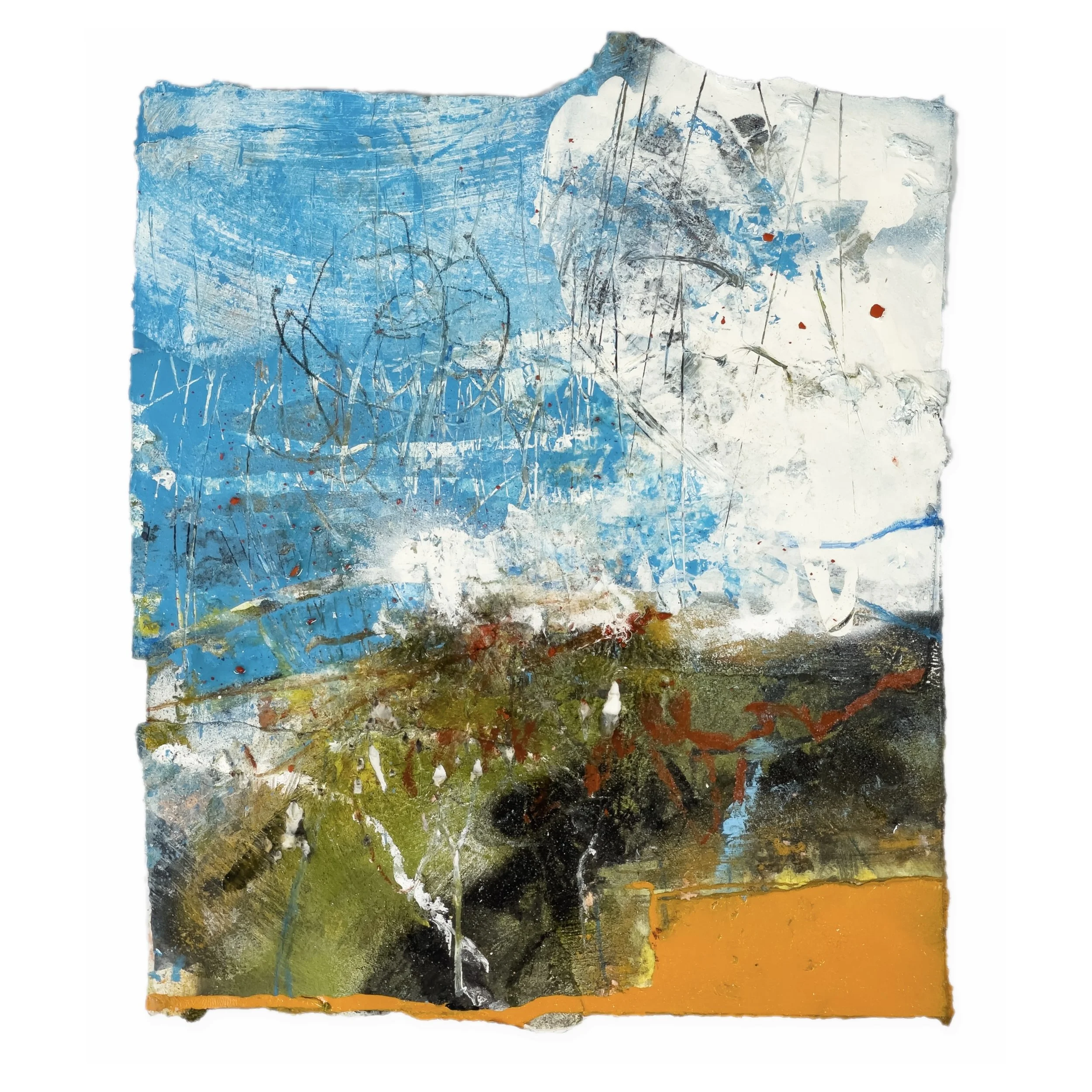
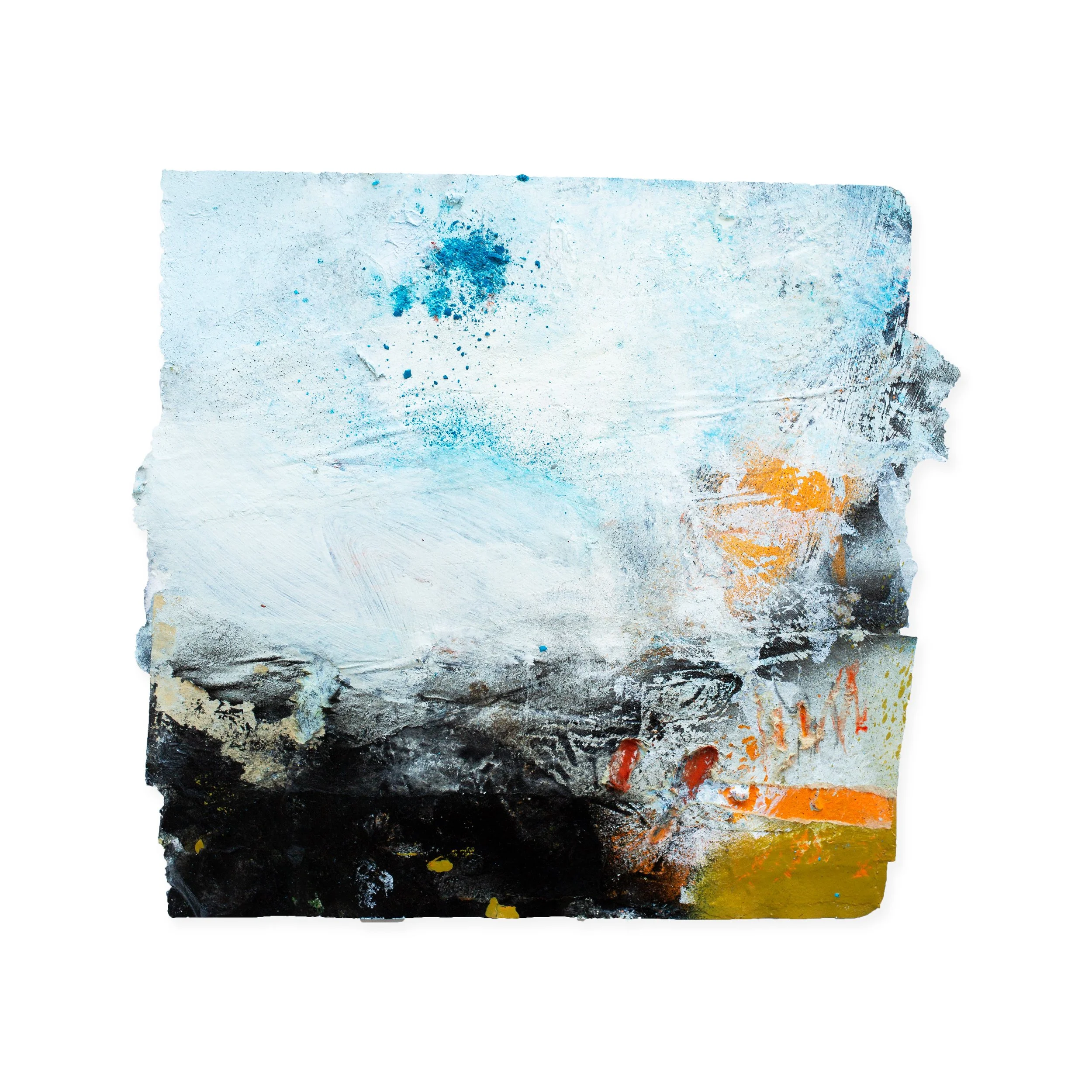
Mixed media painting: combining acrylic paint and collage
There's a particular problem with acrylic paint: it's so versatile that it can sometimes feel like it has no personality of its own. You can make it look like oil, like watercolour, like ink. It can be transparent or opaque, thick or thin. That flexibility is an asset, but it can also mean your paintings feel a bit flat.
Check out my online courses >>
Introducing collage materials into an acrylic painting is one of the most effective ways I know to give a surface life and texture. Not because collage "fixes" the painting, but because the combination of materials starts to generate visual interest that paint alone rarely achieves.
Why collage works
Collage introduces textural contrast. A painted surface and a torn paper surface respond differently to light , one is consistent, the other is random and irregular. That irregularity is interesting.
Collage also introduces colour and pattern you couldn't have invented yourself. Newspaper, music scores, maps, wrapping paper, old letters , these bring accidental marks, aged colours, and layered meanings into the work. The printed words on a piece of newspaper, partially obscured by paint, create a sense of history and depth.
And collage is irreversible. Once you've glued something down, you have to work with it. That constraint removes a certain kind of anxiety , you stop trying to make the painting perfect and start trying to make it work.
Materials to start with
You don't need to source specialist materials. Here's what I use regularly:
Paper: Torn tissue paper, newspaper, pages from old books, music scores, maps, packaging. The key is variety , different weights, textures, and colours.
Adhesive: Matte medium (the same stuff you might use to extend your acrylic paint) works well. It dries clear, is compatible with acrylic paint over the top, and allows you to build up multiple layers.
Paint over the top: Regular acrylic. The beauty of the combination is that you can collage, then paint, then collage again. The layers build.
How to bring them together
The biggest mistake with mixed media work is adding collage as decoration after the painting is "finished." It almost never works , the collage looks applied rather than integrated.
Instead, think of collage as part of the building process from the beginning. Lay down some collage materials early, before the painting has a direction. Let that first layer of collage create the ground that the painting grows from.
Then paint into and over the collage, partially obscuring it. The goal isn't to show off the collage , it's to create a surface where the collage is felt rather than seen. Where you look at the painting and think "there's something interesting happening there" without being sure exactly what it is.
Managing the relationship between materials
The tension in mixed media work is between control and accident. The paint gives you control; the collage introduces accident. Your job is to manage that tension rather than resolve it.
A painting that's too controlled (the collage neatly placed, the paint applied carefully over it) feels timid. A painting that's too accidental (random bits of paper everywhere, paint sloshed over the top) feels incoherent.
What you're aiming for is a surface that has energy and life , where the eye is kept interested , but that still has a strong underlying structure in terms of tone and composition.
Where to take this further
If this interests you, the Painting & Collage course works through exactly this , how to bring acrylic paint and collage materials together in a way that feels considered rather than accidental, and how to develop a consistent personal approach to the combination. There are also course bundles that bring this together with other courses if you want to explore mixed media alongside broader painting practice.
Lewis