How to loosen up your painting — and why tight work is harder to fix than you think
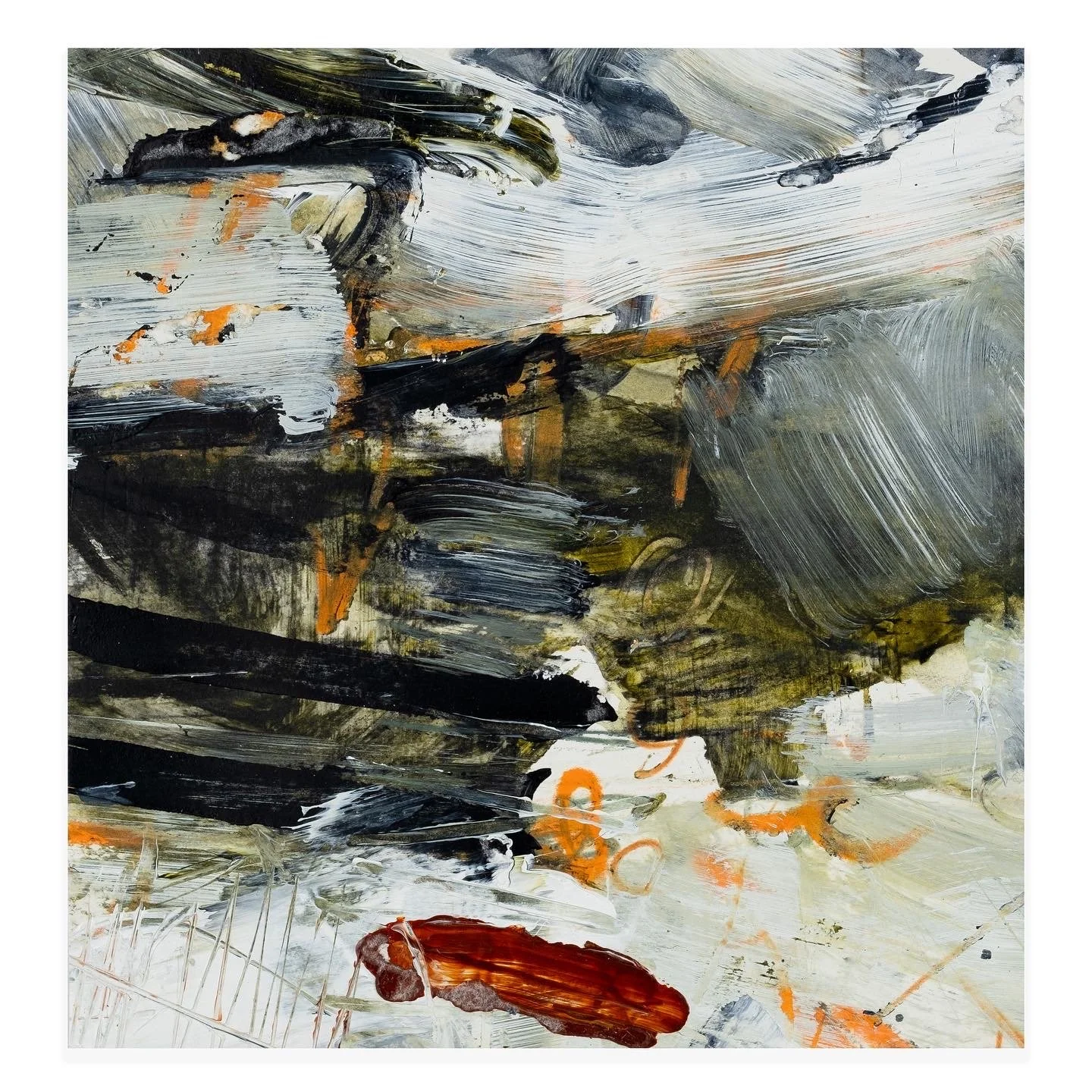
Bold expressive abstract painting by Lewis Noble with energetic black and orange brushstrokes
If you’ve ever stood in front of a painting and thought “I wish I could loosen up” — you’re not alone. It’s the thing I hear more than almost anything else. How do I stop my paintings looking so tight? How do I paint more expressively without it all falling apart?
There’s an accompanying video - Watch on YouTube >>
I wanted to share some honest thoughts on this, because I think there’s a misunderstanding about what loosening up actually means. It’s not about being sloppy or careless. It’s not about throwing paint at the canvas and hoping for the best.
Loosening up is about responding more freely to what you see and feel. And the reason tight painting is so hard to fix is that tightness isn’t a technique problem — it’s a trust problem.
Why tight paintings stay tight
Here’s something I’ve noticed over years of teaching. When someone paints tightly, the instinct is to try to loosen up the finished painting — to go back in with bigger marks or scrape things away. But it rarely works. A tight painting has tight decisions baked into it from the very first mark. The composition is tight. The colour mixing is tight. Everything has been placed carefully, and that carefulness is the problem.
You can’t fix a tight painting by loosening up at the end. You have to start loose.
That might sound obvious, but it’s a real shift in thinking. Most of us were taught to build up carefully — get the drawing right, block in the tones, add detail. That’s a perfectly valid way to work. But if you want expressive, breathing, alive paintings, you need a different starting point.
Start with tone, not detail
One of the simplest changes you can make is to begin with tone rather than drawing. Instead of sketching out the composition with a pencil, try blocking in the big tonal shapes straight away with a large brush and diluted paint.
You’re not trying to get it right. You’re trying to get something down — the weight of the darks, the openness of the lights, the way the shapes sit against each other. It doesn’t matter if it’s messy. That mess is your starting point, and it’s a much more expressive starting point than a careful pencil outline.
I find that when the first marks on the surface are bold and rough, the rest of the painting follows. You’ve given yourself permission to be free. But when the first marks are cautious, you spend the whole painting trying to protect them.
Use bigger brushes than you think you need
If you’re anything like me, your natural instinct is to reach for a brush that gives you control. Something small enough to make precise marks. But precision is the opposite of what we’re after here.
Try this: whatever brush you’d normally use, go up two sizes. If you usually work with a size 6, pick up a size 12. If you normally use a one-inch flat, try a two-inch. It will feel wrong. You’ll feel clumsy and out of control. Good. That discomfort is the feeling of your habits being interrupted, and that’s exactly where new things happen.
A bigger brush can’t make fiddly marks. It forces you to think in broader terms — shapes rather than edges, areas of colour rather than individual objects. And those broader decisions are what give a painting energy and movement.
Stand back. Work faster. Stop sooner.
Three simple things that make a real difference.
Stand back. If your nose is six inches from the canvas, you can only see detail. Step back — right back, across the room if you can — and you’ll see the painting as a whole. That’s how other people will see it. Make your decisions from there.
Work faster. Not frantically, but with purpose. When you work slowly, you have time to second-guess every mark. When you work with a bit of pace, you respond instinctively. Your hand knows more than your conscious mind does. Let it work.
Stop sooner. This might be the most important one. Tight paintings are almost always overworked paintings. There’s a moment when the painting has the energy and the life you want — and then you keep going, tidying, adjusting, adding one more thing. Learn to recognise that moment. Walk away. Make a cup of tea. Come back in an hour and see if it’s actually finished.
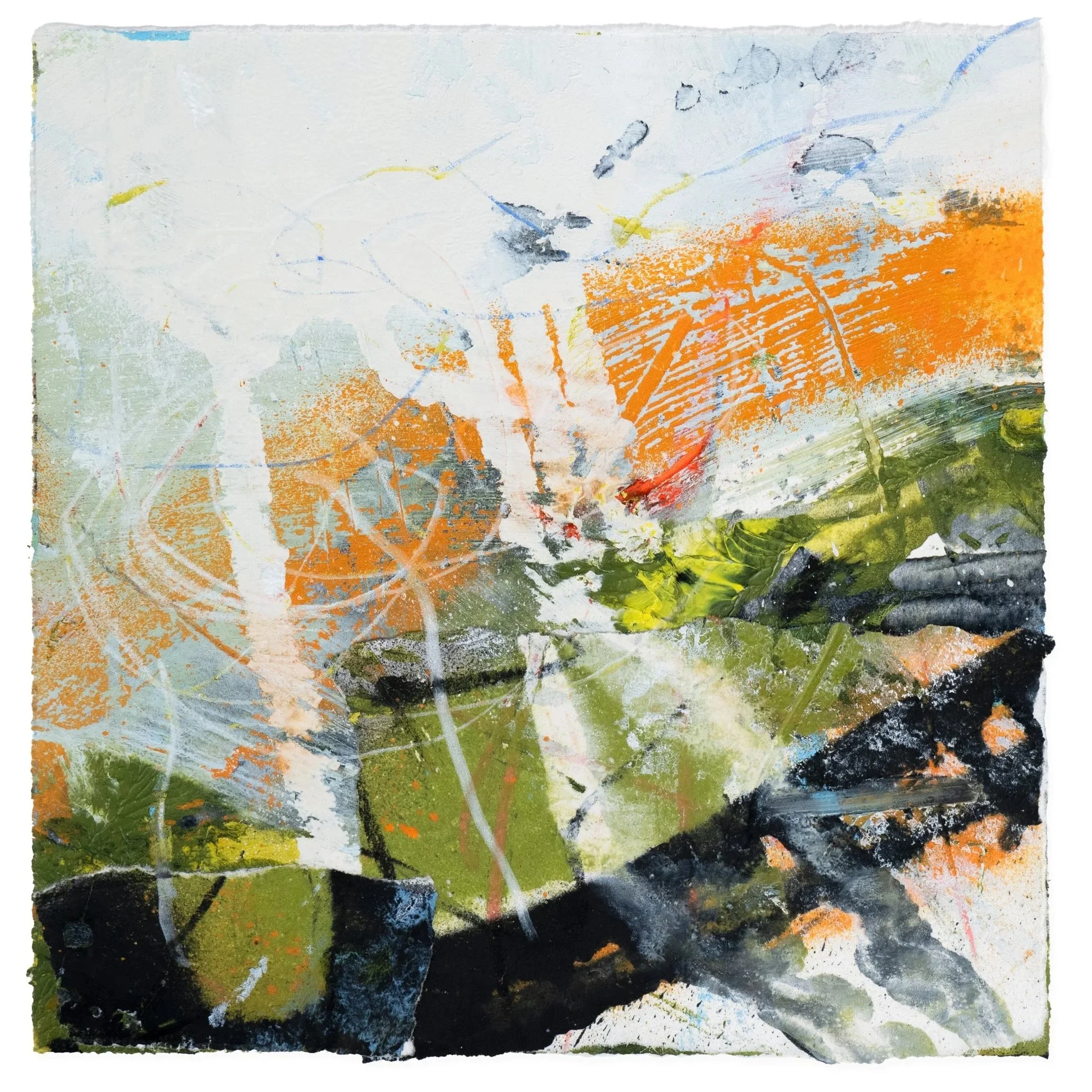
Loose abstract landscape painting with warm orange and green tones on torn paper by Lewis Noble
Let mistakes stay
This is the hardest part for most people. When you make a mark that doesn’t look right, every instinct says fix it. Wipe it off. Paint over it. Get it right.
But those “mistakes” are often the most alive parts of a painting. A drip. An unexpected colour. A line that went somewhere you didn’t plan. These are the marks that give a painting its character. They’re the evidence that a human being made this, not a machine.
I’m not saying you should never correct anything. But try leaving things for a while before you decide they’re wrong. What looks like a mistake in the moment might be exactly the thing the painting needs.
Some of the best marks in my paintings are ones I didn’t plan. And if I’d wiped them away, the painting would be poorer for it.
It’s not about talent — it’s about trust
Loosening up isn’t a skill you either have or you don’t. It’s a way of working that you can practise and develop. Every painter I know who works expressively has been through the same uncomfortable transition — from controlling the process to trusting it.
If your paintings feel stiff and overworked, it’s not because you lack ability. It’s because you haven’t yet given yourself permission to let things be imperfect. And that permission is the whole thing.
The painters who make the biggest leaps on my Abstract Landscape Journey aren’t the ones with the most natural talent. They’re the ones who let go first.
Where to go from here
If this has struck a chord, I’ve made a short video that goes deeper into these ideas. You can watch it on YouTube here — it’s free, and I walk through the process in real time.
If you’d like to explore this further, have a look at my online courses. They’re designed for exactly this — helping painters move from tight, representational work towards something more expressive and personal. Over 1,000 artists have taken the courses, and the feedback has been lovely.
And if you’d like to try before you commit, I have some free taster videos that will give you a feel for how I teach. Or check out
Lewis
